
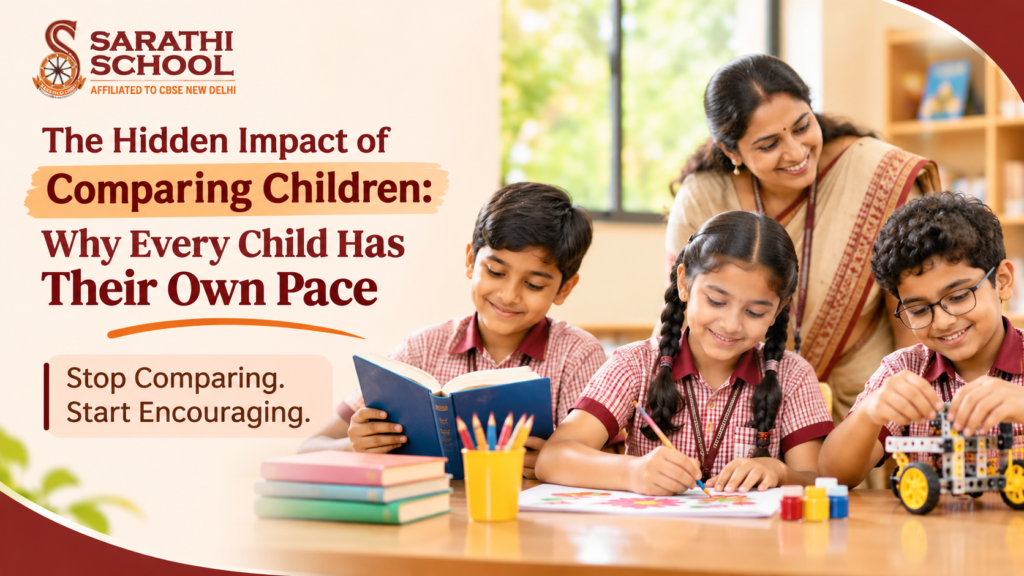
The Hidden Impact of Comparing Children: Why Every Child Has Their Own Pace
💭 “Why can’t you score as much as your friend?” “Look at your sibling. They always finish their homework on time.” “Why are you not as confident as the other children?”
Have you ever found yourself comparing your child with their classmates, siblings, or friends? Or noticed your child feeling disappointed because someone else performed better in an examination, won a competition, or learned something faster?
As parents, we naturally want our children to do well. Sometimes, comparisons may seem like a simple way to motivate them or encourage improvement. However, what adults consider motivation can sometimes make children feel inadequate, discouraged, or less confident about their abilities.
Every child is different. They have their own interests, strengths, personalities, and ways of understanding the world. While one child may excel in academics, another may shine in sports, creativity, communication, or problem-solving.
✨ The journey of childhood is not a race. It is about discovering individual strengths, learning new things, and developing confidence one step at a time.
In this article, let’s explore why adults compare children, how constant comparisons can affect their emotional well-being, and practical ways parents and schools can encourage every child to grow at their own pace.
🤔 Why Do Adults Compare Children?
Comparing children often happens unintentionally. Parents may want to motivate their children, encourage better academic performance, or help them develop good habits. However, these comparisons can sometimes create expectations that do not consider a child’s individual abilities and needs.
Understanding why comparisons happen can help parents become more mindful of their words and actions.
📚 1. Academic Performance: Parents may compare examination marks, grades, or classroom performance with those of other children. This can make children feel that academic results are the only measure of their abilities.
😟 2. Social Behaviour and Confidence: Some children are naturally outgoing, while others are quiet and observant. Comparing a shy child with a more outspoken classmate may make them feel uncomfortable about their personality.
🔄 3. Sibling Comparisons: Statements such as “Your brother never behaves like this” or “Your sister is much more responsible” can create unnecessary competition and resentment between siblings.
🎯 4. Expectations About Achievements: Children may be compared based on their performance in sports, music, dance, drawing, or other extracurricular activities. This can create pressure to excel in activities that may not match their interests.
💭 5. Social Pressure: Sometimes, parents compare their children because they see other children achieving certain milestones or receiving recognition. The desire to keep up with others can unintentionally influence their expectations.
Children need encouragement to discover their abilities, not pressure to become someone else. Recognising their individual strengths is an important step towards healthy development.
🚀 7 Ways Parents Can Help Children Grow Without Comparisons
Building a child’s confidence requires patience, understanding, and consistent encouragement. Parents can create a positive environment by making small changes in their everyday interactions.
🌱 1. Appreciate Individual Strengths
Every child has something special to offer. Some enjoy solving mathematical problems, while others love painting, storytelling, dancing, or playing sports.
Instead of focusing only on what your child finds difficult, take time to recognise what they enjoy and do well.
For example, if your child loves drawing but struggles with mathematics, appreciate their creativity while patiently helping them improve in mathematics.
💡 Remember: Every child has unique abilities. Help them discover and develop their strengths.
💡 2. Focus on Personal Progress, Not Others' Achievements
Children should learn to measure their progress against their own previous efforts rather than someone else’s performance.
For example, if your child scored 55 marks in the previous examination and improved to 65, celebrate that improvement instead of comparing their marks with a classmate who scored 90.
Try saying:
🌟 “You have improved since your last examination. Let’s keep working towards your next goal.”
Recognising personal progress helps children understand that improvement matters more than competition.
🪜 3. Set Realistic Expectations
Every child develops skills at a different pace. Expecting children to achieve everything at the same time can create unnecessary pressure.
Help your child set small and achievable goals based on their abilities and learning needs.
For example, if your child finds reading difficult, encourage them to read a few pages every day rather than expecting them to finish an entire book immediately.
🎉 Small achievements create motivation! Realistic expectations help children develop confidence and enjoy the learning process.
❤️ 4. Avoid Negative Comparisons
Words can have a lasting impact on how children view themselves.
Statements such as “Why can’t you be like your friend?” or “Your cousin is much better at studies” may unintentionally make children question their abilities.
Instead, focus on their efforts, improvements, and individual needs.
You might say, “I know you are trying your best. Let’s understand what is difficult and find a way to improve.”
🌈 Remember, another child’s success does not make your child any less capable. Encourage them to appreciate their own journey.
👨👩👧 5. Encourage Open Communication
Children may not always express how they feel when they are compared with others. Some may become quiet, while others may show frustration or lose interest in activities.
Create opportunities for your child to talk openly about their feelings, experiences, and challenges.
Try asking:
💬 “How did you feel about your performance today?”
💭 “Is there anything you would like to improve?”
❤️ “What makes you feel happy and confident?”
Listen without judging or immediately offering solutions. Sometimes, children simply need someone who understands them.
🧩 6. Encourage Interests Beyond Academics
Academic achievements are important, but they are not the only indicators of a child’s development.
Give children opportunities to explore activities such as:
🎨 Drawing, painting, and craft activities.
⚽ Sports, outdoor games, and physical activities.
🎵 Music, dance, and creative performances.
📚 Reading, storytelling, and writing.
🤝 Group activities, teamwork, and community participation.
Allowing children to explore different interests can help them discover their abilities, develop new skills, and build confidence.
🏆 7. Celebrate Effort and Individual Achievements
Not every achievement needs to be a trophy, certificate, or the highest examination score.
It could be the first time your child answers a question confidently in class, completes a difficult assignment independently, makes a new friend, or participates in a school activity.
Recognise these moments and appreciate the effort behind them.
You might say, “I am proud of you for trying something new. Keep learning and discovering what you can do.”
🌟 When children feel appreciated for their efforts, they become more comfortable exploring new opportunities and accepting challenges.
💬 What Should Parents Say Instead of Comparing Their Children?
The words parents use can influence how children understand their abilities, achievements, and self-worth.
Here are some common situations where a small change in communication can make a positive difference.
📚 When your child scores fewer marks than a friend
❌ Instead of: “Your friend scored 90. Why couldn’t you?”
✅ Try: “Let’s look at the areas where you can improve. I know you can make progress with practice.”
📝 When your child takes longer to learn something
❌ Instead of: “Your classmates have already understood this. Why are you so slow?”
✅ Try: “Everyone learns differently. Take your time, and we will work through it together.”
🎤 When your child is less confident than others
❌ Instead of: “Look how confidently your friend speaks. You should learn from them.”
✅ Try: “You have your own way of expressing yourself. Let’s practise together so you feel more comfortable.”
🎨 When your child has different interests
❌ Instead of: “Why don’t you participate in the activities that other children are doing?”
✅ Try: “What activities do you enjoy? Let’s explore something that interests you.”
💪 When your child feels less successful than others
❌ Instead of: “Everyone is doing better than you.”
✅ Try: “You don’t have to compete with everyone. Focus on learning something new and becoming better each day.”
❤️ These simple changes can help children feel valued, understood, and motivated to work towards their own goals.
🏫 How Can Schools Help Children Grow at Their Own Pace?
A child’s development is influenced by experiences at home, in school, and in the wider community. While parents play an important role, schools also have a responsibility to create an environment where every child feels encouraged to learn and participate.
A positive learning environment recognises that students have different interests, abilities, and learning needs.
Teachers can support individual growth through:
📚 Encouraging Individual Participation: Giving every student opportunities to participate in classroom discussions, activities, competitions, and presentations.
🎨 Recognising Different Talents: Appreciating achievements in academics, sports, arts, communication, creativity, and other areas.
💡 Providing Constructive Feedback: Helping students understand their mistakes and identify areas for improvement without discouraging them.
🤝 Promoting Teamwork: Encouraging students to work together, appreciate one another’s strengths, and learn through collaboration.
🌱 Supporting Individual Learning Needs: Offering appropriate guidance, practice opportunities, and encouragement based on each child’s learning requirements.
🎯 Celebrating Small Achievements: Recognising effort, improvement, participation, and personal milestones rather than focusing only on examination results.
When parents and teachers work together, children receive consistent encouragement to explore their abilities and develop confidence.
At Sarathi School, a supportive and engaging learning environment can help students discover their interests, appreciate their strengths, and develop the confidence to take on new challenges.
🌈 Final Thoughts: Every Child Deserves to Shine in Their Own Way
Every child has a different story, different strengths, and a unique journey of development. Some children may achieve certain milestones early, while others may need additional time, practice, and encouragement.
Comparing children may make them question their abilities, but appreciating their individual progress can help them develop confidence and a positive attitude towards learning.
As parents and educators, our responsibility is not to make children compete with one another but to provide them with the support and opportunities they need to discover their potential.
✨ The next time you feel like comparing your child with someone else, take a moment to recognise how far your child has already come. Celebrate their efforts, appreciate their individuality, and encourage them to keep growing.
At Sarathi School, we believe every child’s learning journey is an opportunity to discover, grow, and build confidence. Together, let’s create an environment where children feel valued, encouraged, and inspired to become the best versions of themselves. 🌟
📢 Admissions Open for 2026–27
If you’re looking for a CBSE school in Habsiguda that focuses on meaningful learning along with the overall development of every child, Sarathi School provides an environment where students are encouraged to learn, explore, think, and grow with confidence.
Because every child is different.
Every ability matters.
And every little step forward deserves to be celebrated.
Admissions are now open for the Academic Year 2026–27.
👉 Visit our campus or connect with us to discover how Sarathi School can support your child’s learning journey.


